IndexPDF journal
Should a Book Index Include Every Mention? How Good Locators Actually Work
A substantive passage can justify a subject heading, but every page reference must still lead readers to useful information. Learn how good locators differ from passing mentions.
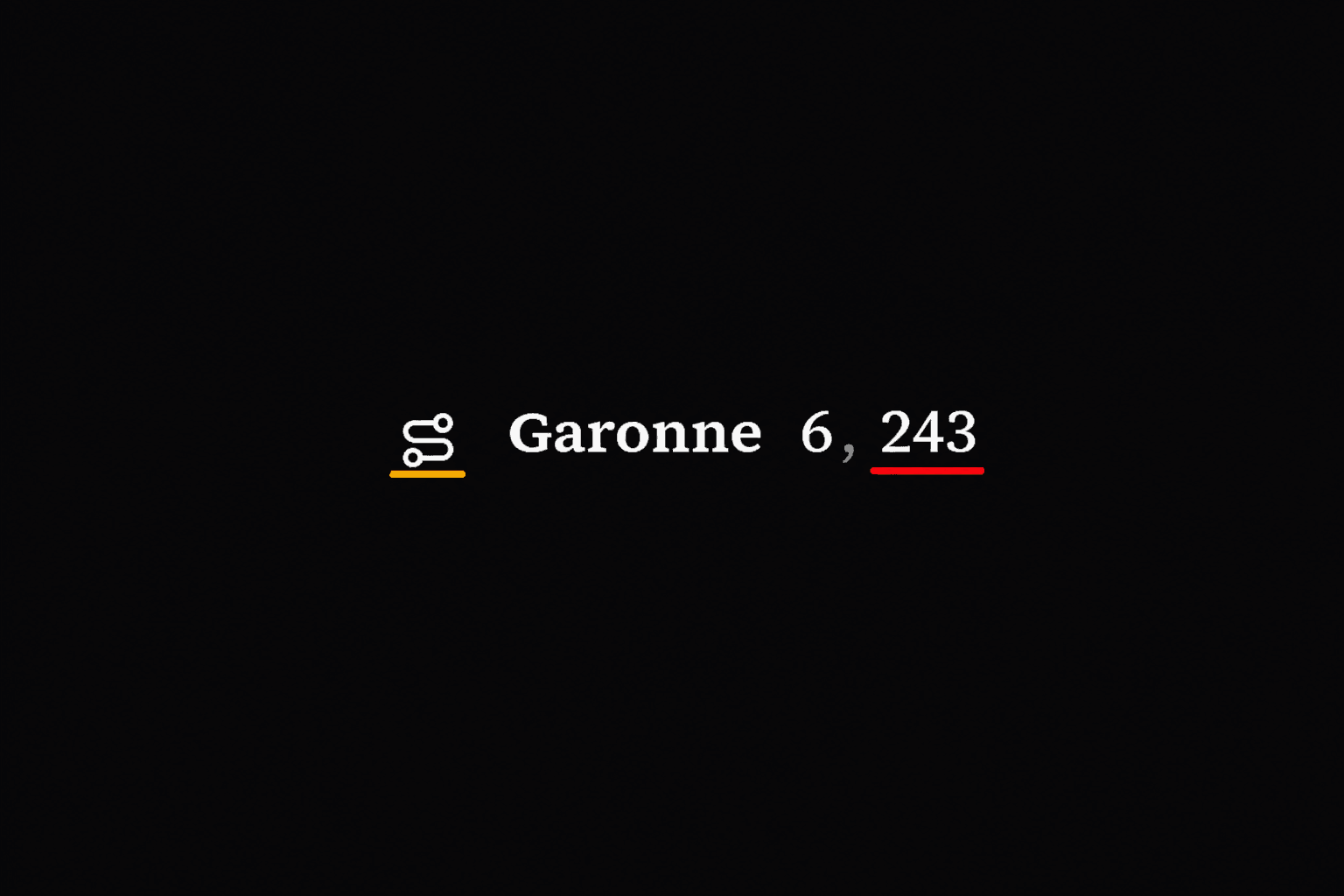
A good locator leads readers to useful information—not merely to a page where the right word happens to appear.
Suppose a book index contains the entry “Garonne 6, 243.” Page 6 contains a substantive discussion of the Garonne. Page 243 merely uses the river as a geographic detail to locate a military camp. Should both page numbers appear?
It is tempting to reason that once the substantive discussion on page 6 establishes Garonne as a legitimate index subject, the index should gather every other appearance of the river under the same heading. That sounds comprehensive. It also resembles digital search: find the term everywhere and return every occurrence.
But that is not how a well-edited subject index ordinarily works. A substantive passage can justify the heading. It does not automatically justify every locator attached to that heading. Each locator makes its own promise to the reader: if you turn to this page, you will find useful information about this subject.
Inspect the Garonne entry in the published-index study to see the entry and its locators in context.
A subject index is not a concordance
A concordance tells us where words occur. A subject index tells us where useful information can be found. A computer can locate every appearance of a word. An indexer must decide which appearances represent meaningful treatment, which brief references may still help a reader, and which are merely incidental.
The American Society for Indexing's Indexing Body of Knowledge identifies the ability to distinguish significant information from passing mentions as a basic indexing skill. ASI's indexing-award criteria pair two complementary expectations: scattered discussions of a concept should be brought together, but irrelevant scene-setting and passing mentions should not be indexed.
The Society of Indexers' guidance on evaluating an index addresses the exact case at issue: passing mentions include brief, repeated references to material discussed more fully elsewhere, and those pages should not appear in the locator list. A fuller discussion elsewhere does not convert every repeated mention into useful index content.
Heading inclusion and locator inclusion are different decisions
1. Does the subject deserve an index heading?
A subject usually deserves access when the book treats it substantively or provides shorter but independently useful information that a likely reader might seek. Frequency alone is not decisive. One brief passage can contain an important definition, conclusion, distinction, or fact. A frequently repeated name can remain peripheral throughout the book.
2. Does this particular page deserve a locator?
Every proposed page reference should be judged separately. The page should contribute useful information within the meaning promised by the complete heading or subheading. One excellent page does not immunize five weak ones.
- The heading is justified. Readers have a legitimate reason to look up the subject.
- One locator is useful. It leads to meaningful treatment.
- Another locator is surplus. It sends the reader to a page that adds little or nothing.
- The repair is local. Remove the surplus page number; do not delete the heading.
“Every place where it is discussed” depends on what discussed means
There is a sound principle inside the argument for inclusiveness: a good index should bring together the subject's scattered treatments. The Society of Indexers' introductory training material describes an index as an aid to finding both major treatments and lesser items that may be useful in another context. This prevents an excessively rigid rule in which only long passages qualify.
A page does not need three paragraphs or a section heading to deserve indexing. It may contain a concise but important fact, definition, comparison, consequence, revealing example, qualification, exception, continuation, synthesis, or conclusion. Its value comes from what the reader learns, not from its length.
By contrast, a page that merely names a place while locating another event, cites a scholar without discussing that scholar, or lists an example without saying anything useful about it generally offers no independent retrieval value. The Society of Indexers identifies such passing mentions as a feature of a bad index.
Index every useful treatment of the subject, not every occurrence of its name.
A practical locator continuum
The editorial decision is not always purely binary. A useful evaluation can distinguish several levels while preserving the professional rule that passing mentions normally should not appear in the finished index.
- Substantive discussion: the page develops, explains, analyzes, or materially uses the subject. Include the locator.
- Brief but independently useful treatment: the page supplies a fact, distinction, example, or connection a reader may reasonably seek. Usually include it.
- Partial or imperfect support: the subject is materially present, but the heading is too broad, narrow, vague, or qualified. Revise the relationship.
- Passing, attribution, citation, or incidental presence: the correct subject appears, but the page offers little independent value. Normally omit it.
- Absent, wrong sense, wrong relationship, or wrong stance: the page does not support the index's claim. Remove or correct it.
A passing mention is not as misleading as a locator that leads to a completely unrelated page: the reader at least encounters the correct entity. But that limited topical relationship does not make the locator editorially justified. A fair evaluation can report both strict substantive precision and graded locator relevance without rewarding concordance-like indexing.
Why including every mention makes an index worse
- It wastes the reader's time. The reader must visit each cited page to discover which references contain actual information.
- It hides important passages. A substantive discussion becomes harder to recognize inside a string of trivial locators.
- It distorts the book's emphasis. Repeated names and places can crowd out less frequent but more consequential concepts and conclusions.
- It duplicates search. Search already finds literal occurrences; an index adds value by analyzing meaning, combining terminology, preserving relationships, and selecting useful destinations.
- It creates false confidence. A long locator string can look thoroughly researched even when most cited pages contribute nothing.
The Society of Indexers makes the search distinction directly in its National Indexing Day explanation: text search cannot distinguish significant information from passing mentions or expose conceptual relationships the way an index can.
Revisiting the Garonne example
The entry “Garonne 6, 243” should not be described simply as a bad heading. That would blur two different findings. The heading is justified by page 6; the locator list is overinclusive because page 243 adds no independently useful treatment of the river.
- Heading “Garonne”: justified by substantive treatment on page 6.
- Locator 6: supported and useful.
- Locator 243: incidental geographic mention; normally surplus.
- Entry-level repair: retain the heading and page 6; remove page 243.
If page 243 contained a distinct fact about the Garonne that a reader of this particular history might reasonably seek, it could qualify despite its brevity. The decision depends on intellectual and retrieval value, source context, and intended readership—not word count alone.
Specialized exceptions also exist. A dedicated place-name index, gazetteer, legal table, prosopographical index, or intentionally exhaustive finding aid may adopt a more inclusive policy. Such a product should disclose its scope. It should not be evaluated as an ordinary selective subject index, and an ordinary subject index should not be expected to behave like it.
What a fair index evaluation should communicate
An evaluation interface should make the repair obvious. It should not leave readers thinking that one surplus page number invalidates an otherwise appropriate subject.
- Heading legitimacy: justified.
- Useful locators: 1 of 2.
- Strict substantive precision: 50%.
- Weakly relevant locator: page 243.
- Completely false locators: none.
- Recommended action: delete page 243 while retaining the heading.
At publication level, the weak locator can affect both selectivity and locator quality for different reasons. Selectivity asks whether it belonged in the index. Locator quality asks how successfully it served the reader. Those consequences should be traceable, while the underlying defect is recorded only once.
The principle to remember
A good subject index is comprehensive about useful information, not exhaustive about word occurrence. One substantive passage may justify a heading. Every additional locator must still earn its place. Brief treatment can be valuable; passing mention generally is not.
When an index mixes one strong locator with one weak one, the right editorial response is usually to refine the locator list—not to condemn the subject or excuse the weak page. The goal is not the greatest number of page references. It is the greatest number of successful research trips.
References and further reading
- American Society for Indexing. Indexing Body of Knowledge.
- American Society for Indexing. ASI Indexing Award criteria.
- Society of Indexers. Commissioning an Indexer (Part 3).
- Society of Indexers. Qualities of a Bad Index.
- Society of Indexers. Qualities of a Good Index.
- Society of Indexers. Training in Indexing: Module A, Sample Material.